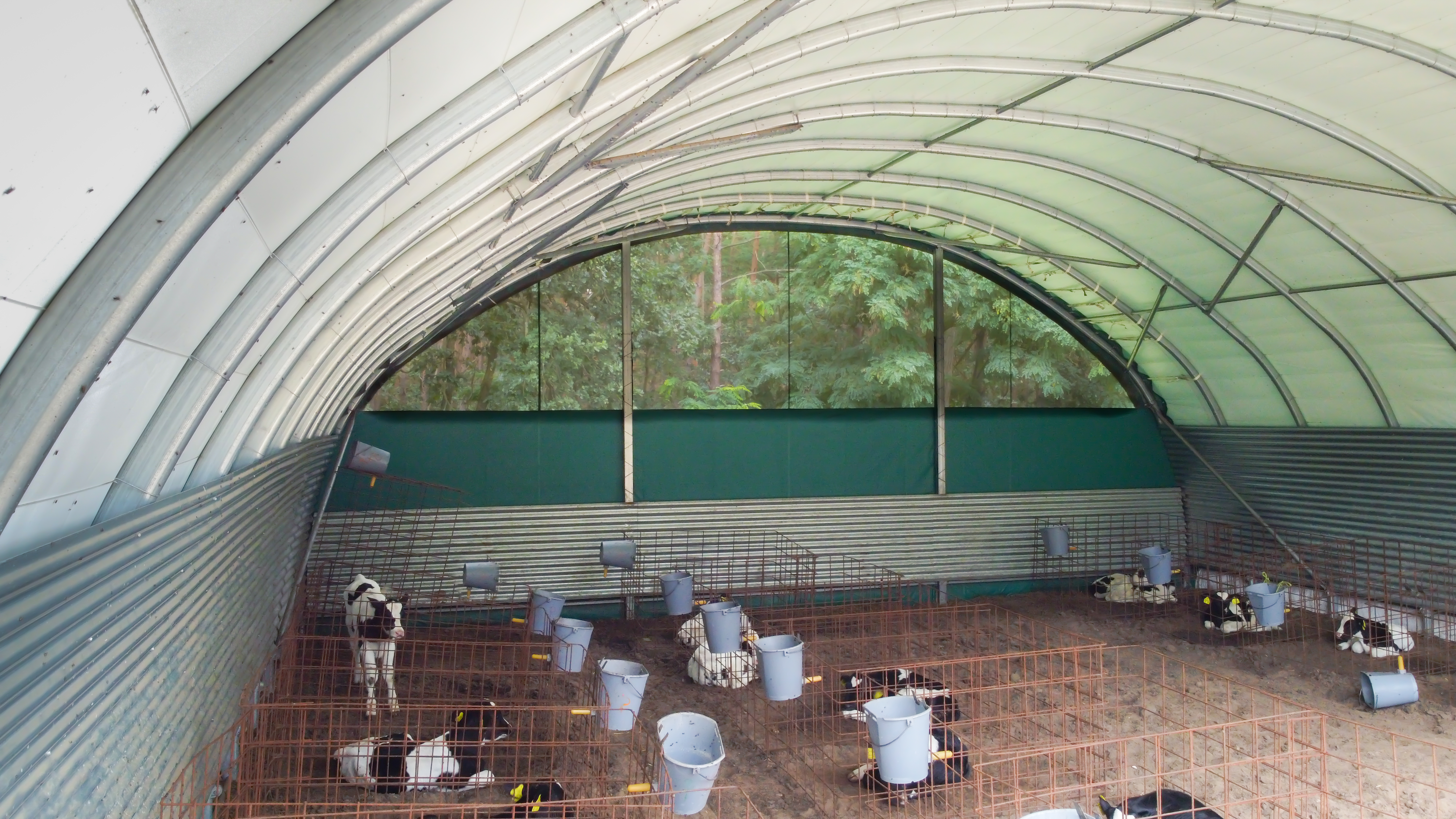
How much does cold actually increase energy needs?
Every species has a thermoneutral zone — a range of ambient temperatures within which the animal can maintain body temperature without diverting metabolic energy toward either cooling or heating. For beef cattle in good body condition, this zone typically sits between approximately 0°C and 20°C. Below the lower critical temperature, the animal must generate additional body heat, and that heat comes directly from feed energy.
The commonly cited figure is a 1% increase in energy requirement for every degree Celsius below the lower critical temperature. In practical terms, a prolonged cold snap at -10°C can increase maintenance energy needs by 20–30% above summer requirements. For animals with wet coats — because effective insulation is dramatically reduced by moisture — the lower critical temperature rises by roughly 8–10°C, making a 5°C wet day energetically equivalent to a much colder dry one.
If the ration is not adjusted, the animal draws on body reserves to meet the deficit. Animals that enter winter in poor body condition have little buffer. Weight loss accelerates, immune function declines, and reproductive performance in the following season suffers.
Body condition: the most important pre-winter metric
Body condition score assessed six to eight weeks before housing or before the expected onset of cold weather is the most actionable pre-winter metric available. Animals that are thin going into winter — BCS 2 or below on a 1–5 scale for cattle, or below 2.5 for sheep — will struggle to maintain condition on even a well-formulated winter ration, because their energy intake is constrained by rumen capacity at exactly the time their requirements are elevated.
Correcting body condition before winter rather than during it is significantly more feed-efficient. The energy cost of gaining one unit of body condition score is roughly three times higher in cold stress conditions than in thermoneutral ones. Put simply: feed given in autumn to improve condition is worth more than the same feed given in January to recover lost condition.
"Feed given in autumn to build condition is worth roughly three times more than the same feed given in January to recover what was lost. Preparation beats correction."
Roughage quality and quantity
Winter feeding in ruminants relies heavily on conserved forages — silage, hay, or haylage. The quality of those forages determines how much supplementary concentrate is needed to meet energy and protein targets. Poorly preserved silage with high pH, visible mould, or significant heating losses can have an energy value 20–30% below a well-made crop from the same field.
Before winter feeding begins, it is worth testing at least representative samples of each forage clamp or hay batch for dry matter, energy (ME), crude protein, NDF, and pH. The results allow the supplementary ration to be formulated accurately rather than estimated, which typically reduces over-supplementation costs while ensuring targets are actually met.
Forage availability also matters. Animals should have ad libitum access to roughage during cold weather, as increased roughage fermentation in the rumen generates heat — a genuine contribution to thermoregulation in housed cattle.
Water in winter — the overlooked issue
Water intake falls significantly in cold weather, primarily because animals are reluctant to drink very cold water. In housed cattle, water temperatures below 4–7°C measurably suppress voluntary intake. Reduced water intake reduces feed intake, which compounds the energy deficit problem.
Where possible, insulating or heating water troughs to maintain water temperature above 10°C during cold spells has a demonstrable positive effect on dry matter intake and animal performance. At minimum, checking that troughs are not freezing and are physically accessible in icy conditions is a basic but often overlooked winter management point.
Key micronutrients to review before winter
Three micronutrient areas warrant specific attention as herds move into winter housing:
- Vitamin E and selenium — both are critical for immune function and muscle integrity, and both are commonly deficient in conserved forages. White muscle disease in calves and retained placenta in cows can both be linked to selenium and vitamin E deficiency. Blood testing a sample of animals before housing provides an accurate baseline.
- Vitamin D — synthesised in skin via UV exposure, vitamin D production effectively stops in housed animals during winter in northern latitudes. Supplementation in housed cattle and sheep is straightforward and inexpensive relative to its importance for calcium metabolism and immune function.
- Magnesium — hypomagnesaemia (grass staggers) is most commonly associated with lush spring grass, but housed animals on poor-quality hay or straw-based rations with limited magnesium supplementation can also develop subclinical deficiency, affecting nerve function and immune response.
Winter nutrition checklist
- Assess body condition score on all groups 6–8 weeks before housing. Target BCS 3–3.5 for cow/calf beef herds, BCS 3 for dairy cows entering the dry period.
- Test all conserved forages for ME, CP, DM, and NDF before feeding begins. Adjust concentrate supplementation accordingly.
- Review water supply — insulate or heat troughs if possible; ensure no freezing and adequate trough space per head.
- Supplement vitamin E and selenium where blood or liver biopsy indicates deficiency. Boluses, injectable, or dietary supplementation all effective.
- Add vitamin D to rations for housed cattle and sheep — particularly important for young stock and late-gestation females.
- Increase energy density of rations for all groups when sustained temperatures fall below 0°C, particularly for thin animals and young stock.
- Ensure adequate shelter for animals that remain outdoors — wet, wind-exposed animals have dramatically elevated maintenance requirements compared to housed or sheltered ones.
Winter nutrition management is not complicated, but it rewards attention to detail and early action. The herd that arrives at spring turnout in good condition, with strong immune function and minimal metabolic disease, is one that was managed proactively through the preceding autumn — not one that was rescued in February.